


Welcome back to The Red Letter.
While much of the conversation around UFC Freedom 250 has centered on politics and conflicts of interest, I wanted to know what the event actually felt like on the ground. So I sent my producer and reporter, Abi Baker, to the White House Ellipse and asked her to write a first-person dispatch about the atmosphere, the fans, and the collision of patriotism, sports, and commerce that defined the night.
It felt like Coachella crashed into a crypto conference and landed on the White House lawn. It was Sunday night. The air was thick with humidity, money, and testosterone.
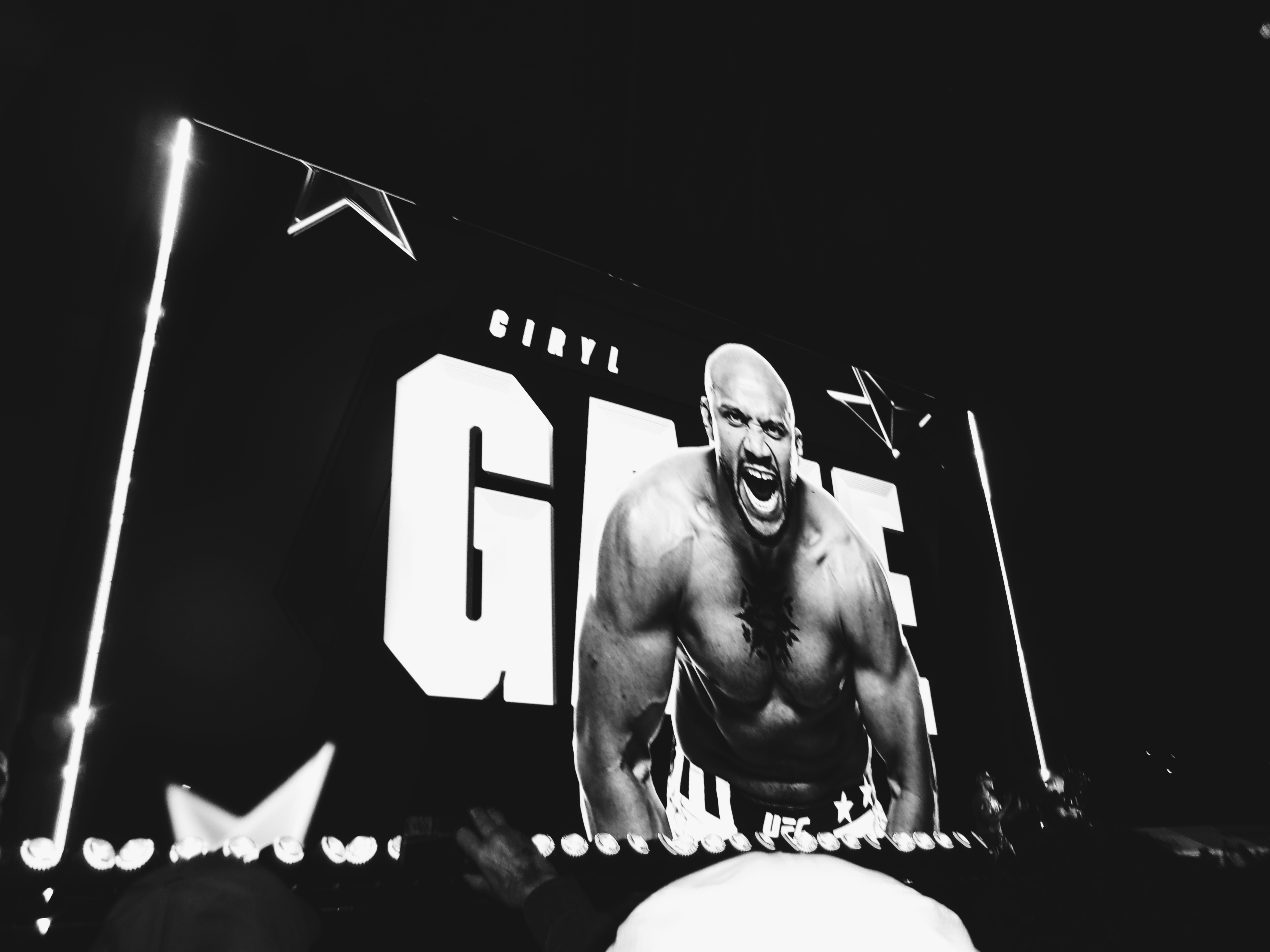
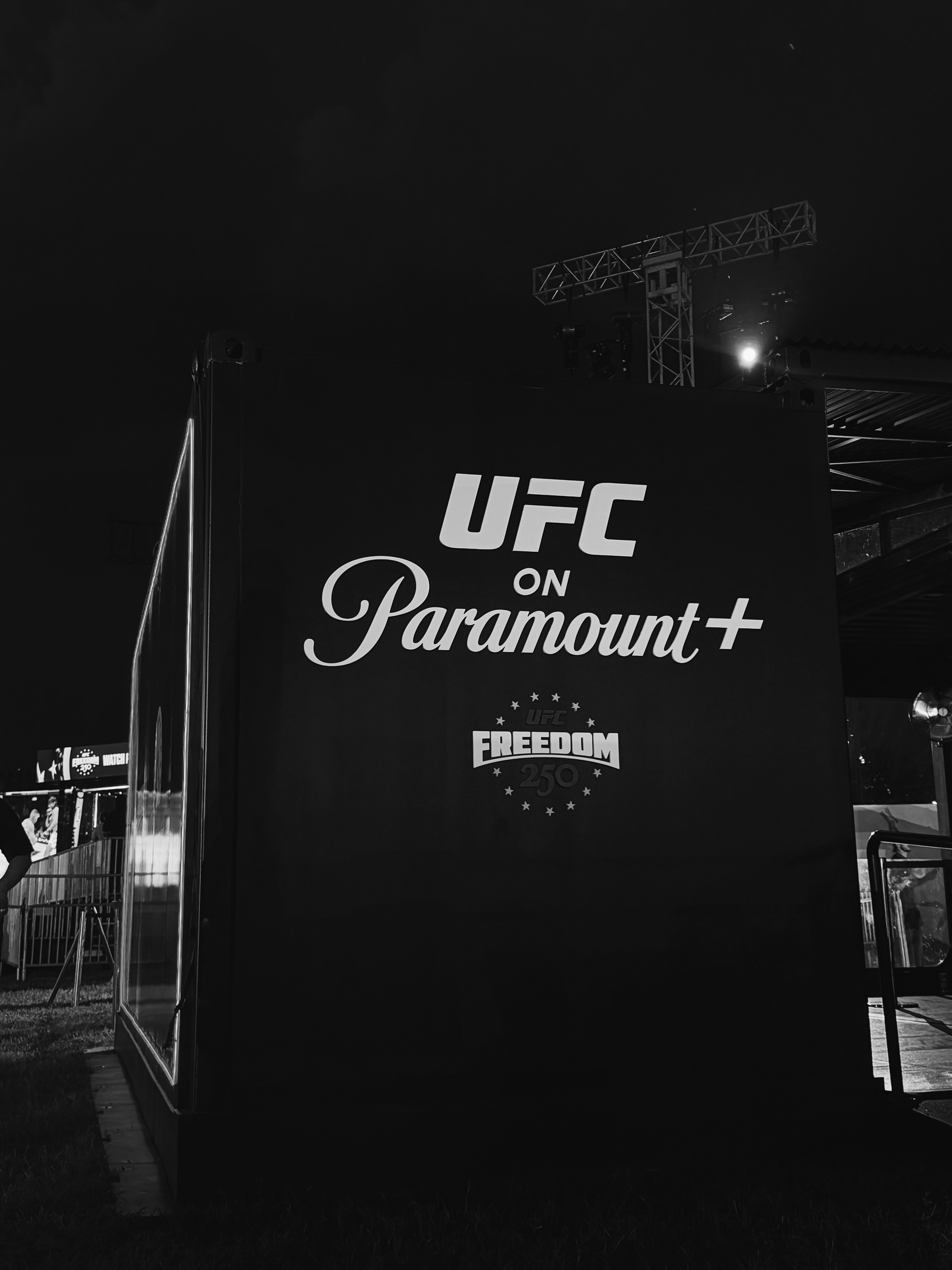
Except this was the White House Ellipse, and it had disappeared beneath towering stages, massive LED screens, and sponsor tents. Meta was ready to turn your face into a personalized fight poster. Bud Light promoters taught lessons on how to throw a punch. Monster Energy stationed racy “octagon” girls for photo ops with over-eager men who waited in lines stretching dozens deep. Ram trucks gleamed under the Washington sun. Crypto.com logos beamed off massive balloons. Paramount+ branding covered nearly every corner.
It was impossible to tell where the patriotism ended and the advertising began.
The festivities were not part of the official nonpartisan America 250 organization, and as the night went on, the lines became increasingly blurred between what the weekend was actually honoring: Americans or America’s corporation. Even the closed-captioning was sponsored by Trump’s own World Liberty Financial crypto venture.
The event wasn’t just a celebration—it was a business venture.
TKO President Mark Shapiro openly described UFC Freedom 250 as “a strategic investment to drive subscriber acquisition at Paramount+.” While UFC executives acknowledged they expected to lose money on the reported $60 million production, they were betting on long-term growth through subscriptions, advertising and brand exposure. Viewers who wanted to watch from home had to pay $8.99 for a Paramount+ subscription.
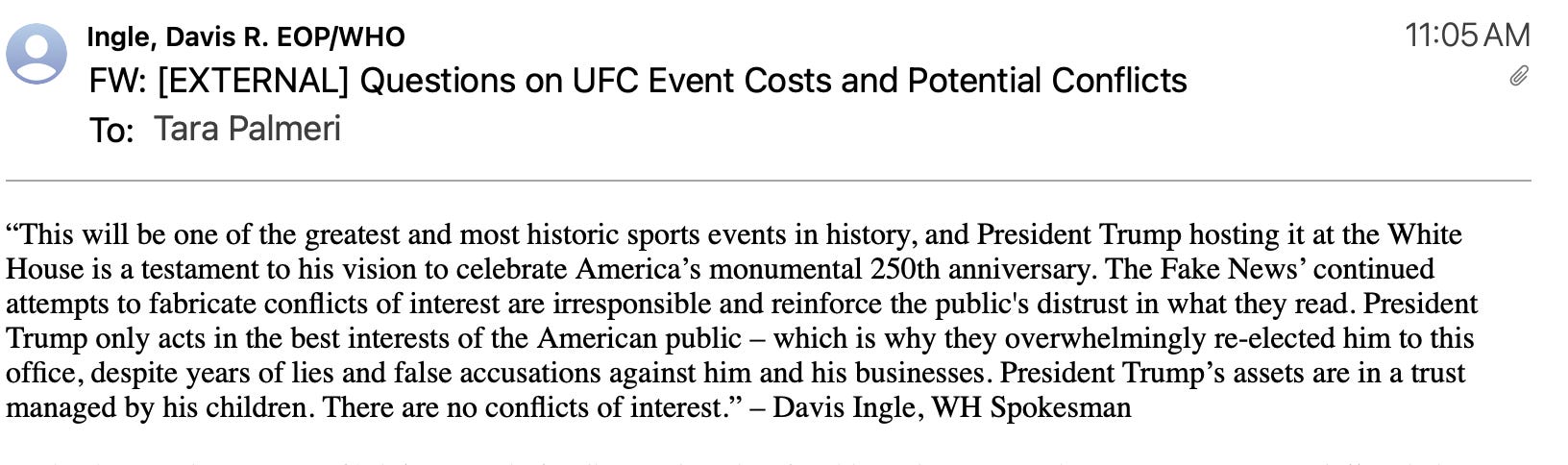
President Trump also stood to benefit financially. Financial disclosures show he increased his holdings earlier this year in both TKO Group, the UFC’s parent company, and Paramount, the media giant whose streaming service exclusively carried the event. The official line from the White House is “President Trump’s assets are in a trust managed by his children. There are no conflicts of interest,” White House spokesman Davis Ingle told The Red Letter.
But the optics remain striking: a White House event serving as a marketing vehicle for companies in which the president has invested. Even if the financial payoff comes months or years later through higher stock prices or subscriber growth, the spectacle functioned as a massive promotional campaign that could ultimately benefit both corporate sponsors and the president’s own portfolio.
Yet when I talked to fans, almost none of that seemed to matter.
Attendees had traveled from California, Tennessee, Ohio and New Jersey. Many had never been to Washington before. Several told me they weren’t particularly interested in politics at all. They were there because they loved UFC.
Among them was Gavin Ellis, a 23-year-old from Chattanooga, Tennessee, who described himself as “completely politically homeless right now.”
“My biggest pet peeve right now is how people are making this political,” he told me. “This isn’t political.”
Then he offered what may have been the most revealing observation of the weekend:
“One of the coolest things you can experience as an American is watching two dudes beat the hell out of each other on the White House lawn. There’s nothing more American than that.”
Ellis fit a demographic that has become central to Trump’s coalition: young men who consume sports, podcasts and UFC culture but increasingly describe themselves as politically unmoored.
He told me he once supported Trump but now feels disillusioned.
“I used to believe that [Trump] wanted to make America great again,” he told me “This is an amazing event that has nothing to do with his policies. I do not agree with any events going on in Iran. I feel lied to.”
That disconnect was perhaps the most striking part of the weekend’s events.
Inside the Beltway, the conversation centered on conflicts of interest, sponsorship deals and Trump’s financial relationships with companies connected to the event. Outside the Beltway, attendees saw something entirely different: a free UFC show on the White House grounds and a chance to witness what they believed was a once-in-a-lifetime spectacle.
Jason, who flew in from California but would not give me his name, wasn’t there because of Trump either.
“I like fights. It’s like a car crash—you can’t look away.”
The event’s supporters argue that this is simply modern America: sports, entertainment and politics converging in one massive cultural moment. And there is truth to that. The atmosphere genuinely produced camaraderie among strangers. Fans cheered together, traded merchandise and traveled across the country to participate in something unprecedented.
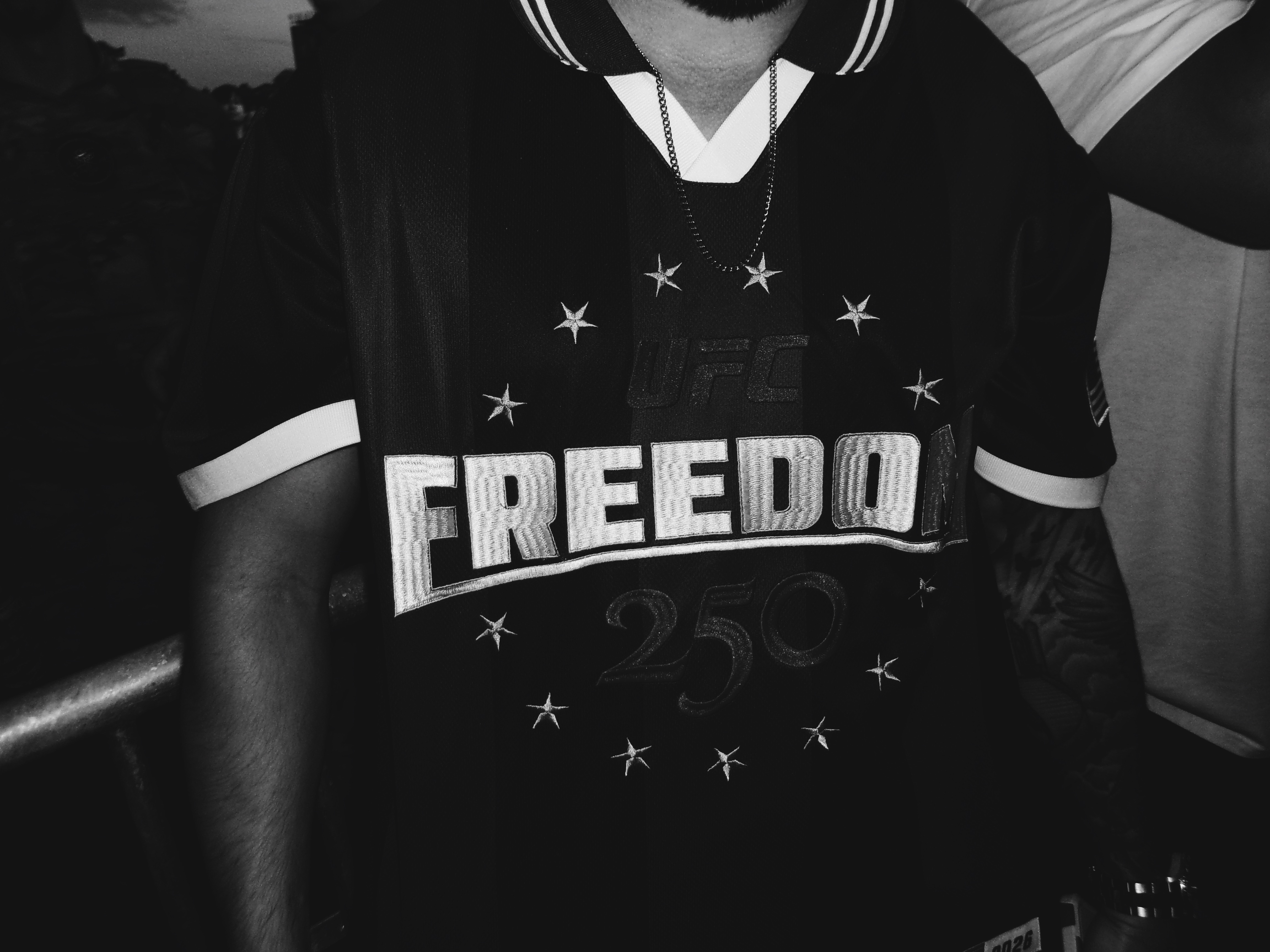
But the commercialization was impossible to separate from the spectacle itself.
Every emotional high point seemed to be followed immediately by another reminder to subscribe, scan a QR code, or buy into a cryptocurrency venture. It felt like late-stage capitalism wrapped in patriotism. Consumerism hadn’t been replaced—it had simply found a new flag to wave.
The White House has hosted concerts, Easter Egg Rolls and Fourth of July celebrations before. But this felt different—less like a public gathering than a branded experience that happened to take place at the symbolic center of American democracy.
Perhaps that is what made the weekend so fascinating. Washington saw conflicts of interest and corporate influence. The fans saw the event of a lifetime.
Maybe that tonal confusion is precisely what defines this political era. Not that politics and commerce exist side by side, but that they’ve become nearly impossible to distinguish.


