


Welcome back to The Red Letter.
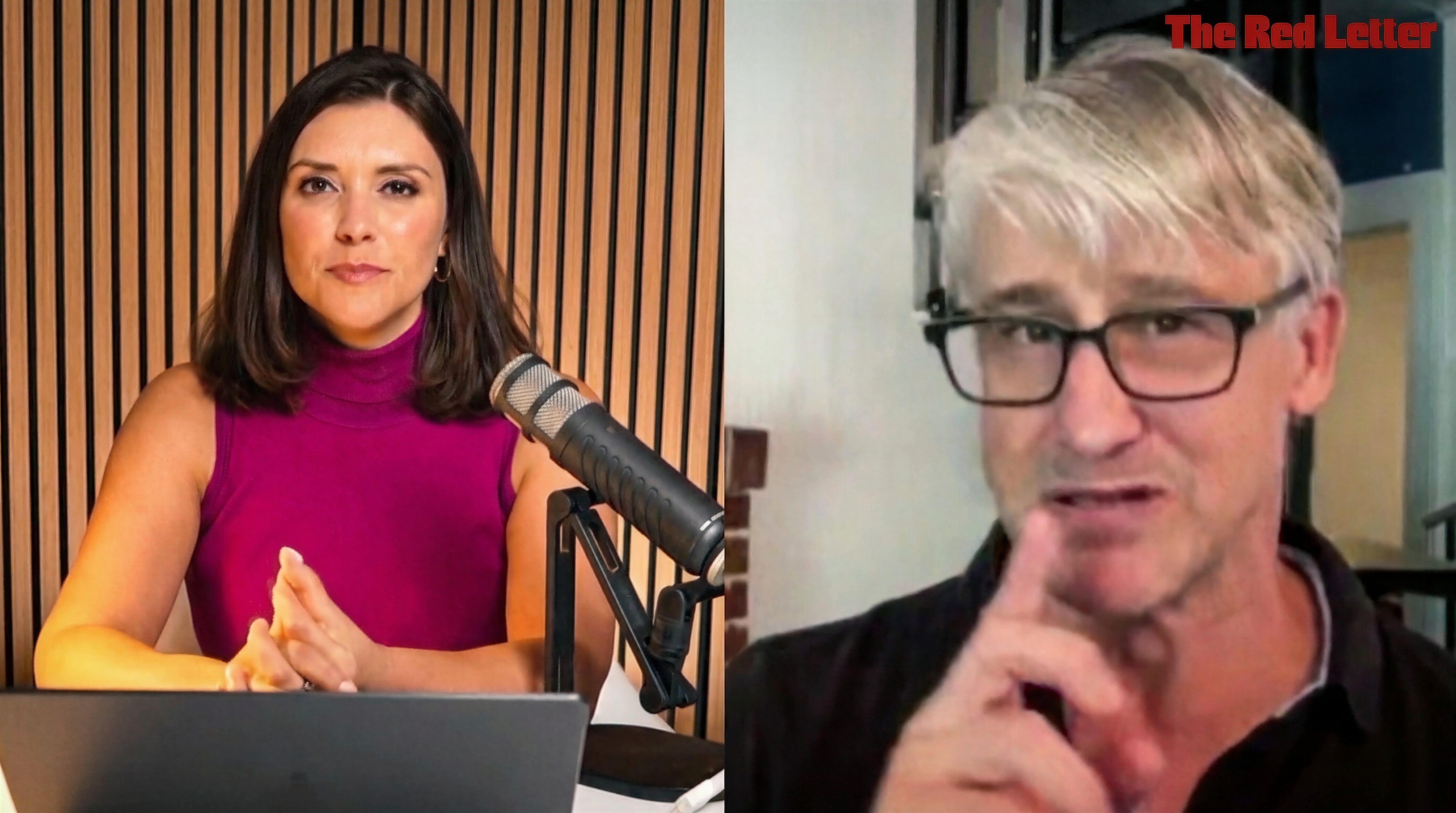
I invited former colleague, friend and ace Axios White House correspondent Marc Antony Caputo onto the show because there’s a lot of gossip coming out of this White House right now — and Caputo is one of those reporters who actually knows what’s happening behind the scenes.
First, the revolving door is spinning again.
The Brookings Institution puts turnover among Donald Trump‘s top “A-Team” at more than 50 percent in his first year. That’s still nowhere near the churn of Trump 1.0, when turnover became practically a defining feature of the administration, but the exits are piling up. Press Secretary Karoline Leavitt is on her way out. White House counsel David Warrington is leaving. And the bigger question is: who actually has power around Trump now?
Caputo’s answer was surprisingly short: Susie Wiles, Stephen Miller, J.D. Vance, Marco Rubio, Steven Cheung — and, until her departure, Leavitt. In other words, Trump’s real court is pretty small.
And “court” may be the operative word. Caputo compared Trump to a sultan, surrounded by a small group of people who have access to him and therefore influence over him. In Trumpworld, proximity to power is power.
And then there’s Natalie Harp.
Her letters — in which she refers to him as her “guardian and protector” — had taken on an almost mythical quality in Trumpworld: everyone had heard about them, reporters had written about them, but few had actually seen them, until today.
To many, she’s the aide who became known as Trump’s “human printer,” trailing him with a portable printer so she could feed him tweets, articles and other material that flattered him and improved his mood. It’s a familiar ritual — one I revealed back in 2017, when I was a White House correspondent for POLITICO and his aides foolishly believed they could keep him off Twitter by serving up positive news that would ease his temper.
But Caputo told me something he hadn’t put in his previous reporting: Trump had his own nickname for Harp.
“My conveyor belt.”
As Caputo explained it, Trump said Harp “got him whatever he needed.”
So what exactly is Harp angling for?
It’s not a bigger title or influence over policy. It’s Trump himself — his affection, admiration, respect and acceptance. Her devotion to him is on another level, Caputo explained.
And yet the role itself isn’t entirely new. Trump has long relied on intensely loyal female aides who anticipate what he wants and keep him supplied with the information — and affirmation — he craves.
When I was a young reporter at the New York Post, I would call his longtime assistant Rhona Graff, who seemed to be available 24/7 to connect him with members of the media.
“If I really wanted to whisper something in his ear, I would probably go to Rhona,” his longtime friend, New York grocery billionaire John Catsimatidis, told me in 2017.
Because in Trumpworld, proximity is everything.
Which perhaps explains why somebody keeps leaking about Harp. After all, it’s a world notorious for knifing one another to get closer to the boss.
Harp got very close — all the while reportedly working for nearly a year without a routine security clearance. Even stranger: before working for Trump, she was employed at One America News Network, a right-wing outlet that has amplified pro-Kremlin agendas.
Then we got to the bigger problem: Trump’s numbers.
Caputo pointed to something more interesting than the topline approval rating. The intensity of Trump’s support among Republicans has fallen sharply. Voters aren’t necessarily abandoning him altogether; some are just moving from “strongly approve” to merely “somewhat approve.”
Or, as Caputo put it much more succinctly:
“The thrill is kind of gone.”
That matters with the midterms approaching and control of the Senate potentially in play. We went through the map and played a little game: Send Trump or Hide Trump?
Michigan? Maybe send him.
Alaska? Send him.
Iowa, where farmers are feeling the pain from tariffs?
“Definitely hide,” Caputo said.
The problem, of course, is that Trump may show up whether Republican candidates want him or not — as in North Carolina.
And while voters are worried about prices, tariffs, gas and the war with Iran, what is Trump talking about?
The White House lawn. The renovations. The ballroom.
He’s entirely checked out.
Caputo said Trump recently walked reporters around the White House grounds for roughly half an hour, showing off the new grass and talking about the ballroom — returning, in a way, to his original obsession: real estate.
Maybe that’s the most revealing thing about this phase of Trump. His poll numbers are sliding, the midterms are approaching, aides are heading for the exits — and the former developer is thinking about what he can build and leave behind. His legacy.
The full conversation with Caputo is below, early, exclusively to paid members.
BEYOND THE PAYWALL: The full video exposing names, states and private calculations shaping the next phase of Trump’s presidency.
The five people who actually have Trump’s ear, and the seemingly powerful officials who remain outside his real inner circle
The state-by-state “send Trump or hide Trump” map Republicans won’t discuss publicly
Why GOP insiders would deploy him in Michigan and Alaska (but may want him hidden from tariff-weary voters elsewhere)
What Trump’s 30-minute tour of his grass, marble and ballroom reveals about what has gone wrong
The two numbers that could finally trigger panic inside the White House
