

The Epstein Files Aren’t Just Emails. They May Be a Video Archive.
J-mail, the search engine built by a few 20-somethings organized the Epstein files, but they say the DOJ may still be sitting on the vast majority of the data seized from Epstein’s homes.

Welcome back to The Red Letter.
The Department of Justice may be sitting on as much as 40 terabytes of footage from Jeffrey Epstein’s homes. And yet what we’ve seen so far? A few hundred gigabytes of documents, photos, emails, flight logs, depositions and court transcripts.
Which raises a question that sits at the center of the Epstein mystery: where is the rest of the archive—and what’s in it?
Because if you understand what terabytes of data actually means, the implications become obvious. Emails and PDFs don’t take up that kind of space. Video does.
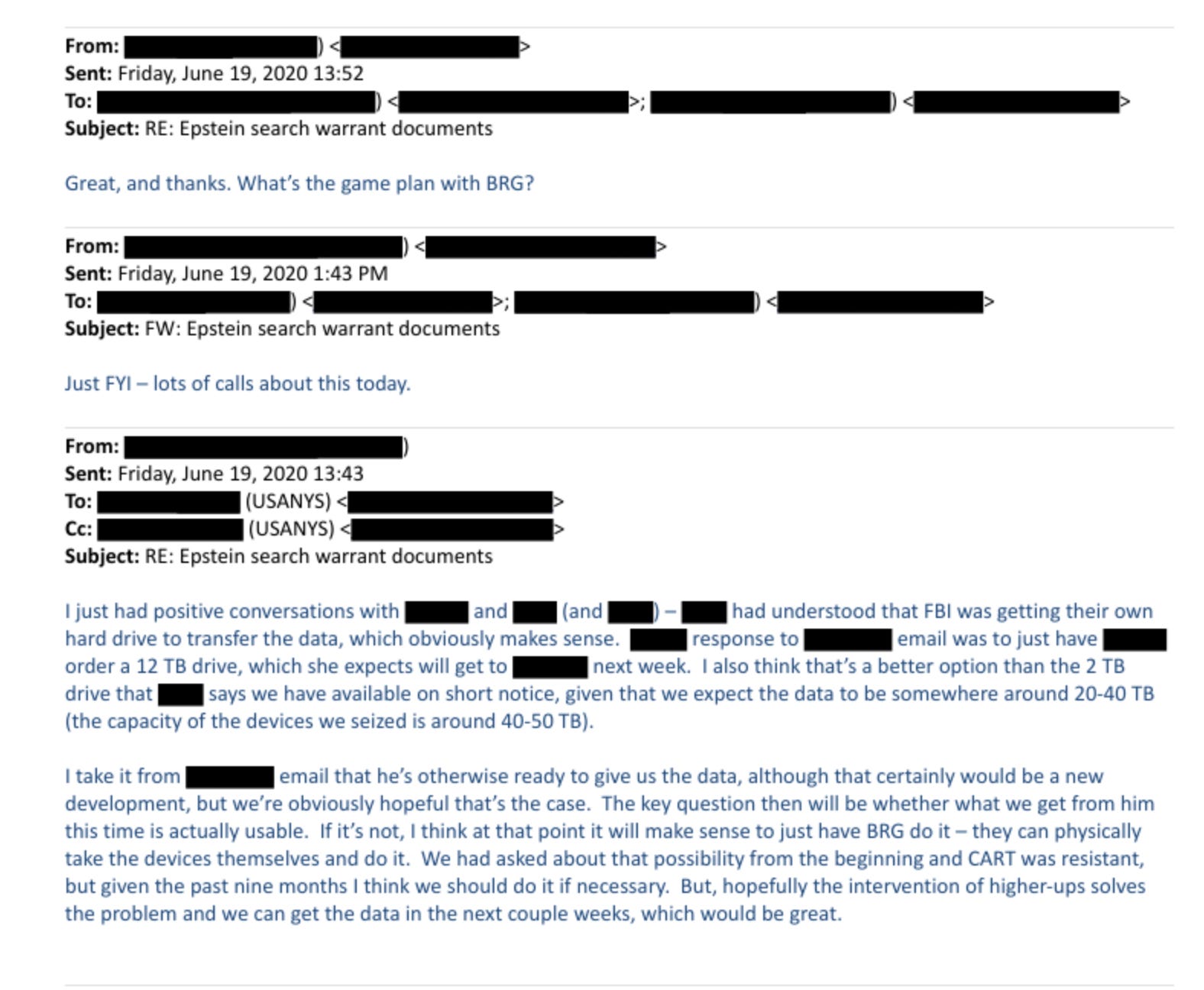
“The only way that a single person can have 19 terabytes of data is through images and video,” said Luke Igel, one of the creators of the Epstein-files search engine J-Mail. “Text alone does not take up that much data. It appears that if we’ve received a couple hundred gigabytes so far from the Epstein estate and from the DOJ, that leaves about 98 percent of the known data from Epstein’s estate not being in our hands.”
This is not at all surprising. Survivors recalled to me the feeling of being recorded. Inside Epstein’s upper east side mansion you can see cameras on the corners of the ceilings. His pilot Larry Visoski e-mailed him about installing pin cameras that were so small, that could fit in tissue boxes.
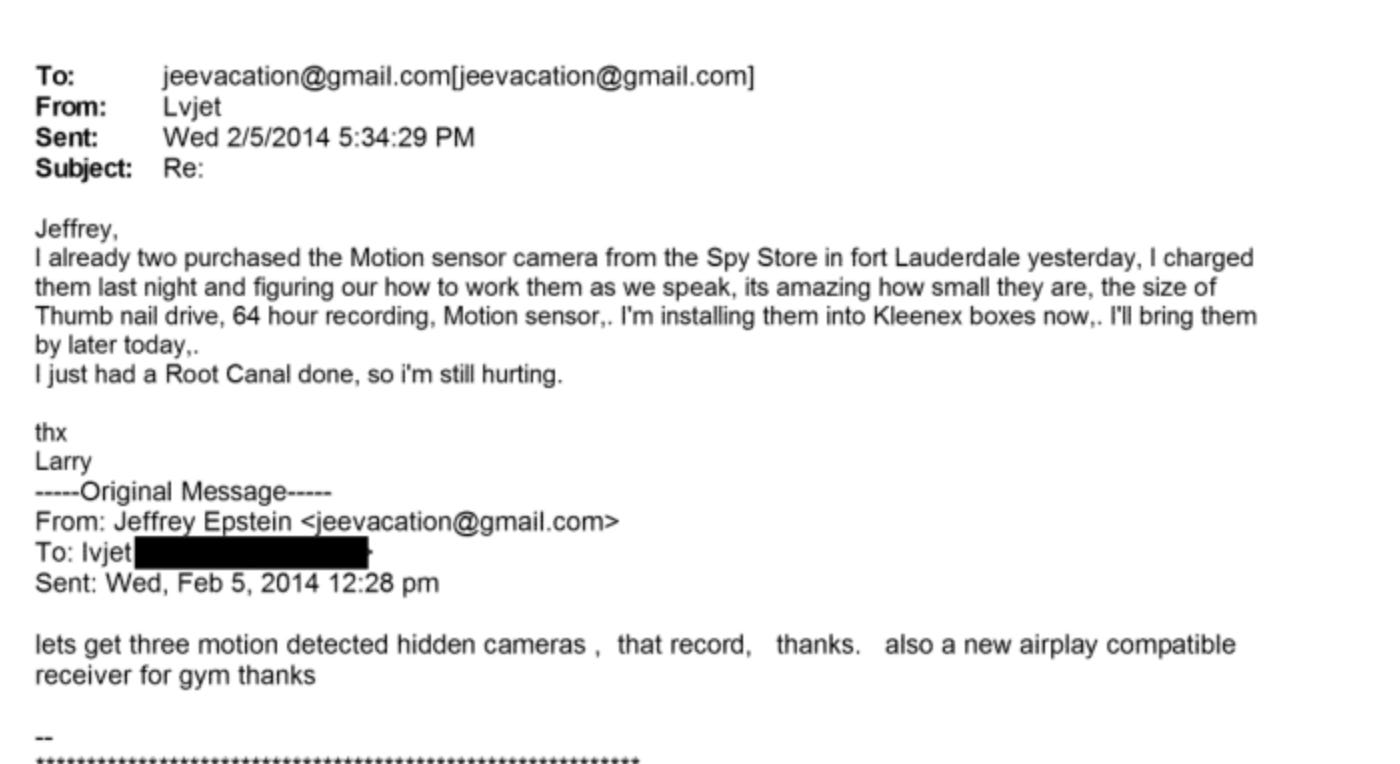
“I’m installing them into Kleenex boxes now,” he wrote in an 2014 e-mail, describing how these motion detective cameras could record for 64 hours.
In other words: Epstein may have been recording what happened inside those houses for blackmail.
And if those recordings still exist, there’s a real chance they’re now sitting inside government evidence lockers and we still don’t know why they remain classified.
But if those numbers are correct, the public has seen only a tiny sliver of the Epstein archive — a vast digital vault that remains largely sealed. That mystery led a group of twenty-somethings in San Francisco to build J-Mail, a search engine designed to organize the millions of pages of Epstein documents released so far.
The idea was simple: turn the chaotic Epstein files into something searchable, using an interface that looks like Gmail — a platform so many of us use every day. Who among us hasn’t spent a late night typing names into J-Mail just to see what turns up?
The response has been staggering. The site has already drawn roughly 150 million visitors, according to the team behind it, who I interviewed for The Tara Palmeri Show.
But they admit it’s also incomplete—and in some cases shockingly disorganized.
“It’s a pristine archive compared to the three million sloppy — at times borderline unethical — pages released by the DOJ,” Igel said. He pointed to instances where the department updated files after publication, altered redactions, and uploaded documents containing sensitive information about victims that later had to be removed.
Tracking those changes became such a challenge that the J-Mail team built software to monitor, just to make sure every update the DOJ made to the archive was tracked.
Paid subscribers can read the full interview below
Including:
• Why the team believes huge portions of the Epstein archive are still missing
• The mysterious terabytes of evidence investigators seized
• The emails Congress are now being asked to un-redact
• And what the Justice Department may still be holding back
