

JD Vance is Rewriting Trump’s Epstein History. I Have Receipts.
As Vance promotes a book about faith, he’s also asking Americans to accept a remarkably forgiving version of Trump’s relationship with Epstein. Thank God I have receipts.

Welcome back to The Red Letter.
I’m used to the gaslighting and spin that comes from the Trump administration. But I was particularly enraged watching JD Vance defend President Trump’s relationship with Jeffrey Epstein on The View and attempt to recast Trump as some kind of hero in the scandal.
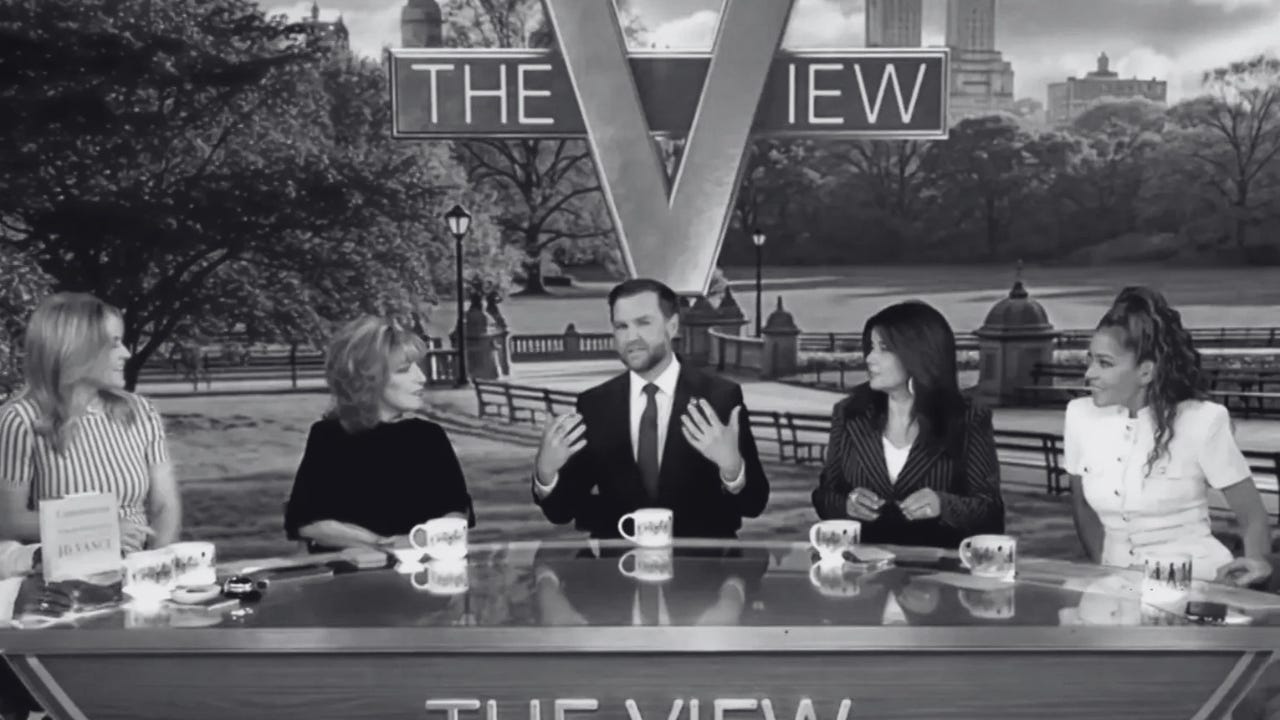
Vance, a remarkably smooth political operator, cloaks himself in the legitimacy of New York Times reporting, sprinkling his arguments with enough facts to create the appearance of transparency while obscuring the larger truth. The strategy isn’t disclosure. It’s overload. Flood the zone with fragments and half-context until no one knows what matters.
After all, Vance is thinking about 2028. He understands that positioning himself as an Epstein “conspiracy theorist”—whatever that term is supposed to mean—plays well with parts of the Republican base.
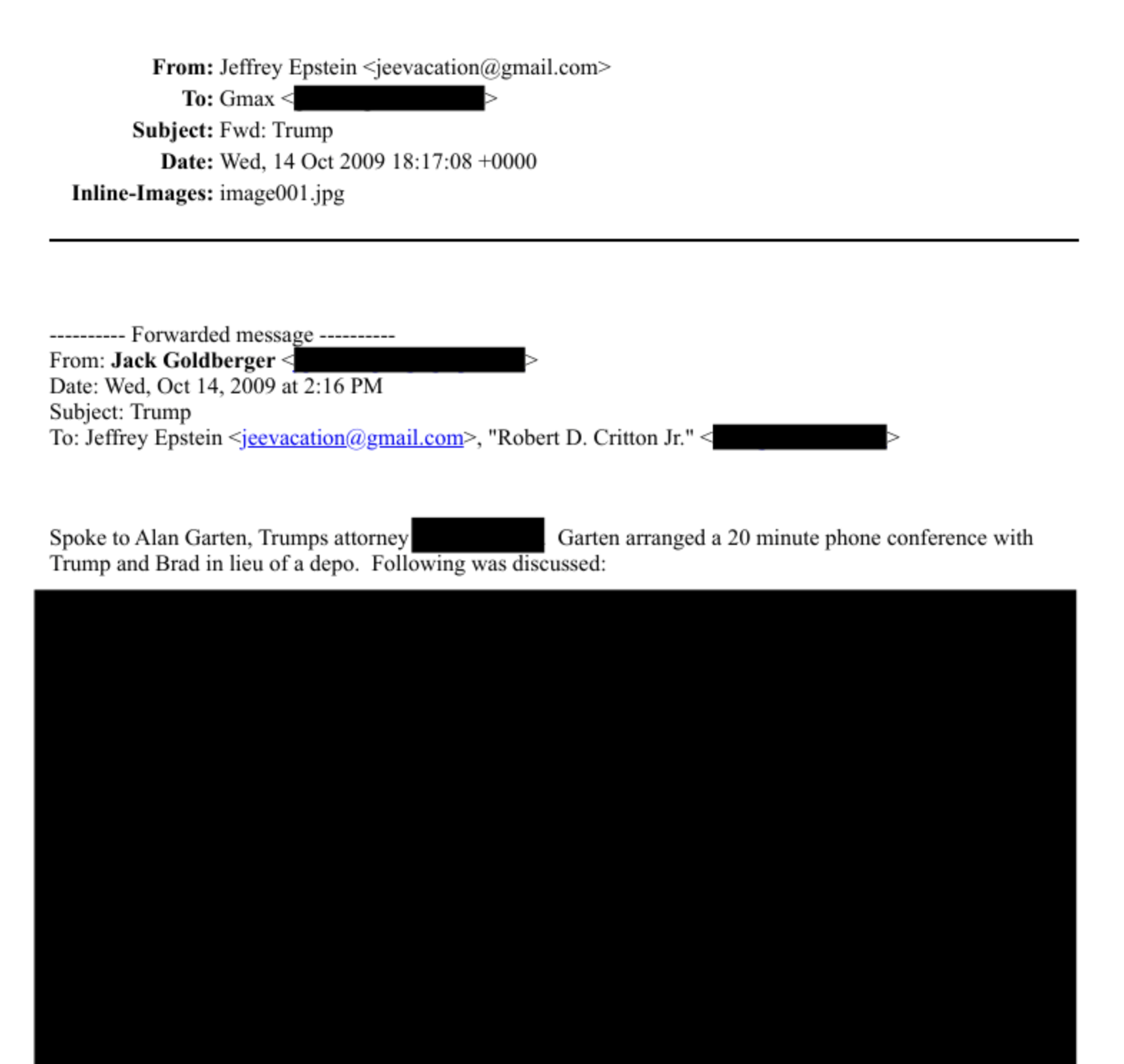
But there were so many falsehoods, omissions, and contradictions in his defense of Trump that I couldn’t let them pass. I’ve spent years reporting on Epstein, reviewing thousands of pages of records, interviewing victims, witnesses, lawyers, investigators, and lawmakers. I’ve also spoken with a member of Congress who was permitted to review the redacted email titled “Trump” inside the Department of Justice—a document that sheds significant light on whether Trump actually threw Epstein out of Mar-a-Lago.
So I’m going to break down, one by one, the claims Vance is making and compare them against the public record.
Because what I’m witnessing is an active whitewashing of this scandal. Whether it’s bro-casters debating whether the victims were really underage, semantic arguments over the definition of pedophilia, or administration officials trying to rewrite Trump’s role in the story, the effect is the same: the historical record is being distorted.
I will not accept a narrative in which Trump emerges as the hero of the Epstein saga. The evidence shows something far more complicated—and far less flattering. At various points, he was a friend, an associate, a beneficiary of silence, and ultimately an enabler of a system that operated in plain sight for years and possibly even worse.
This analysis is based on my original reporting, court records, FBI documents, congressional testimony, and the Epstein files themselves.
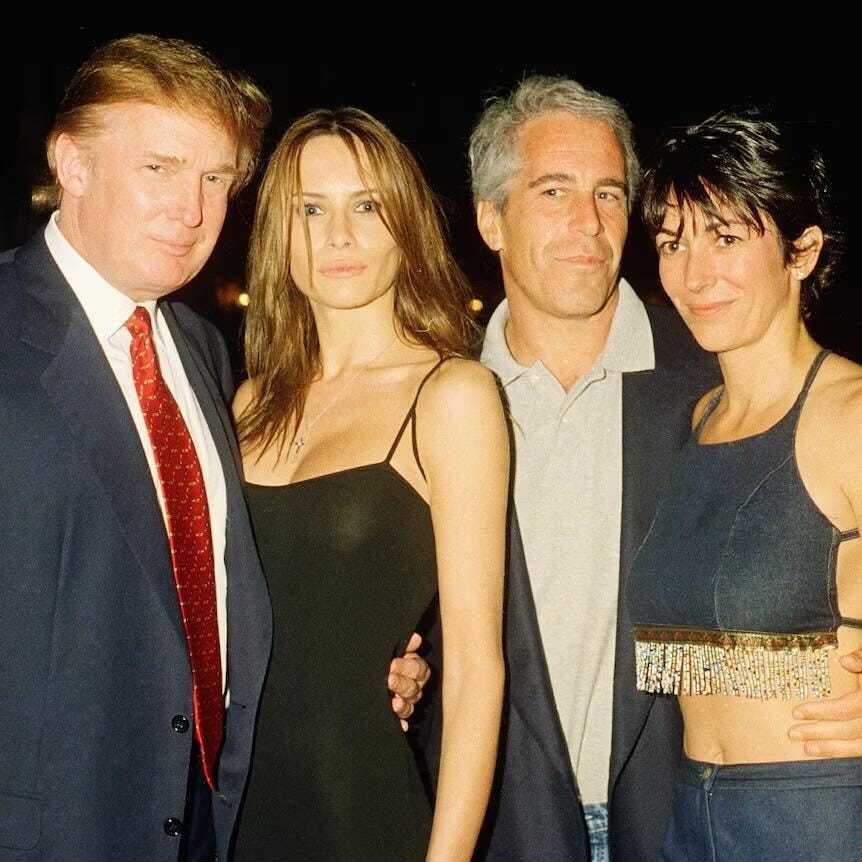
LIE: Donald Trump reported Epstein to the police.
TRUTH: Trump did, in fact, make a phone call to Palm Beach Police Chief Michael Reiter, but that call came in July 2006—more than a year after the investigation had already been launched in March 2005. Palm Beach police had received reports concerning Epstein even earlier. As far back as 2001, authorities were hearing allegations that Ghislaine Maxwell was recruiting young girls. During that period, Trump and Epstein remained close.
In 2002, Trump famously told New York Magazine that Epstein was a “terrific guy” and noted that they both enjoyed beautiful women.
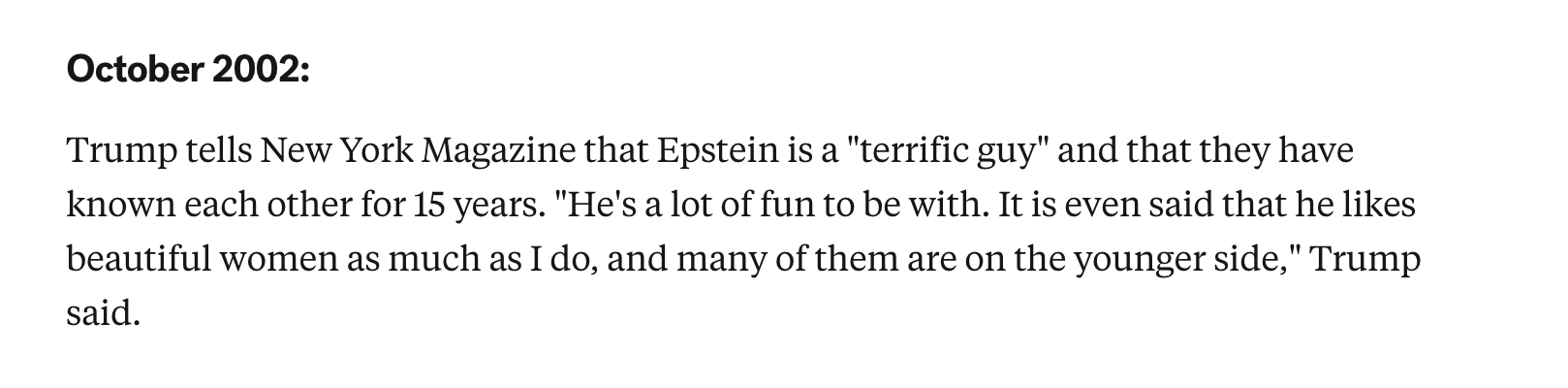
So Trump did not initiate the investigation. He called after Epstein had become his enemy. By that point, their friendship had already collapsed following a bidding war over a waterfront mansion known as the House of Friendship in 2005. Epstein drove up the price, and Trump ultimately purchased the property for $41.35 million before selling it three years later for $95 million to a Russian oligarch.
Only after the relationship soured did Trump begin speaking out.
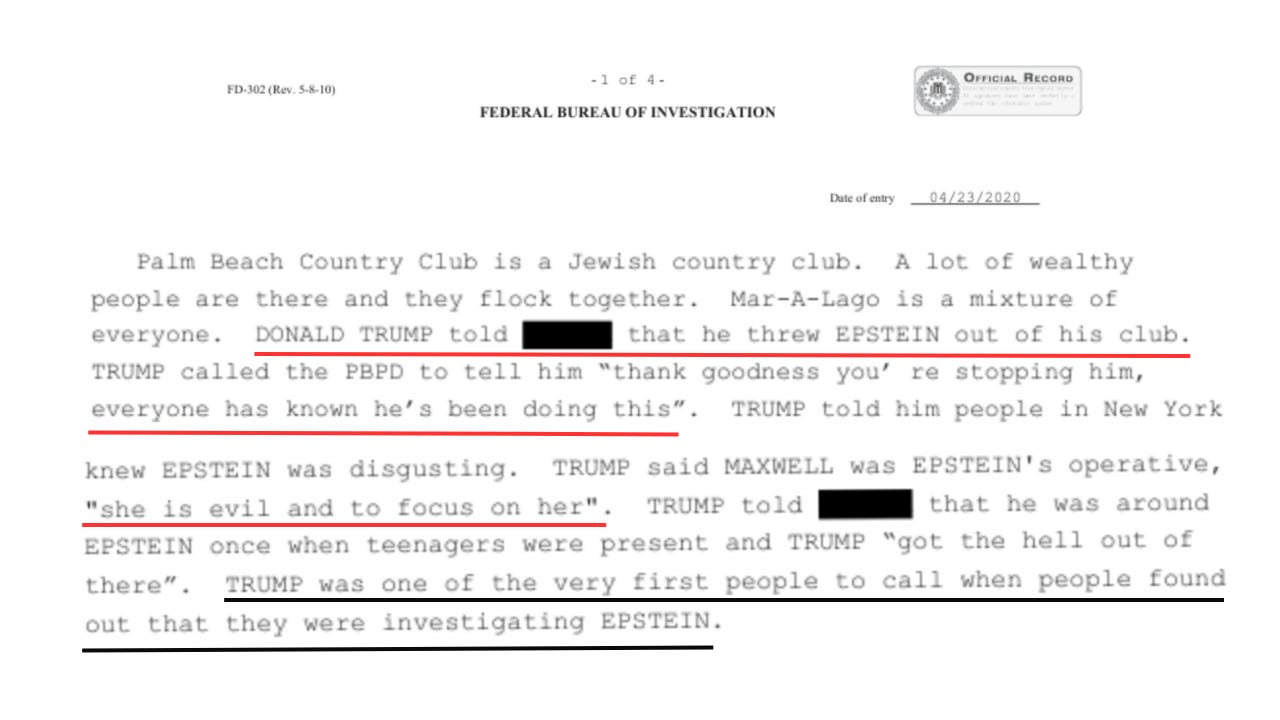
According to an FBI memorandum memorializing a 2020 interview with Reiter, Trump told him during the July 2006 call: “Thank goodness you’re stopping him, everyone has known he’s been doing this.”
Trump also claimed he had thrown Epstein out of Mar-a-Lago and said that “people in New York knew he was disgusting.” Reiter further recalled Trump describing Ghislaine Maxwell as Epstein’s “operative” and urging investigators to focus on her because “she is evil.”
The timeline matters. Trump did not sound the alarm when Epstein was his friend. He spoke up after the friendship ended.
And years later, when Epstein was arrested again in 2019, Trump told reporters: “No, I had no idea. I had no idea. I haven’t spoken to him in many, many years.”
Trump has also dramatically changed his public posture toward Maxwell. After her arrest in 2020, he repeatedly wished her well. He has remained reluctant to rule out a pardon or commutation, even as Maxwell serves a federal prison sentence for helping Epstein abuse underage girls.
Vance wants you to focus on one line in the FBI memo: that Trump was “one of the very first people to call when people found out that they were investigating EPSTEIN.”
But the rest of the memo is harder to explain away.
According to Reiter’s account, Trump said “everyone has known he’s been doing this.” He described Maxwell as Epstein’s “operative.” He said people in New York knew Epstein was “disgusting.”
Those statements are difficult to reconcile with Trump’s later claim that he had “no idea.”
The phone call may help Trump’s defenders argue that he cooperated with investigators. It does not transform him into the whistleblower Vance now portrays.
If anything, it raises a more uncomfortable question: if Trump believed “everyone” knew what Epstein was doing, why did he later insist that he knew nothing at all?
LIE: Trump threw Epstein out of Mar-a-Lago.
TRUTH: The evidence on this point is far murkier than Vance suggests.
There are conflicting accounts about whether Epstein was ever a member of Mar-a-Lago. There is no dispute, however, that Epstein spent time there. Video footage and photographs show him socializing with Trump at the club.
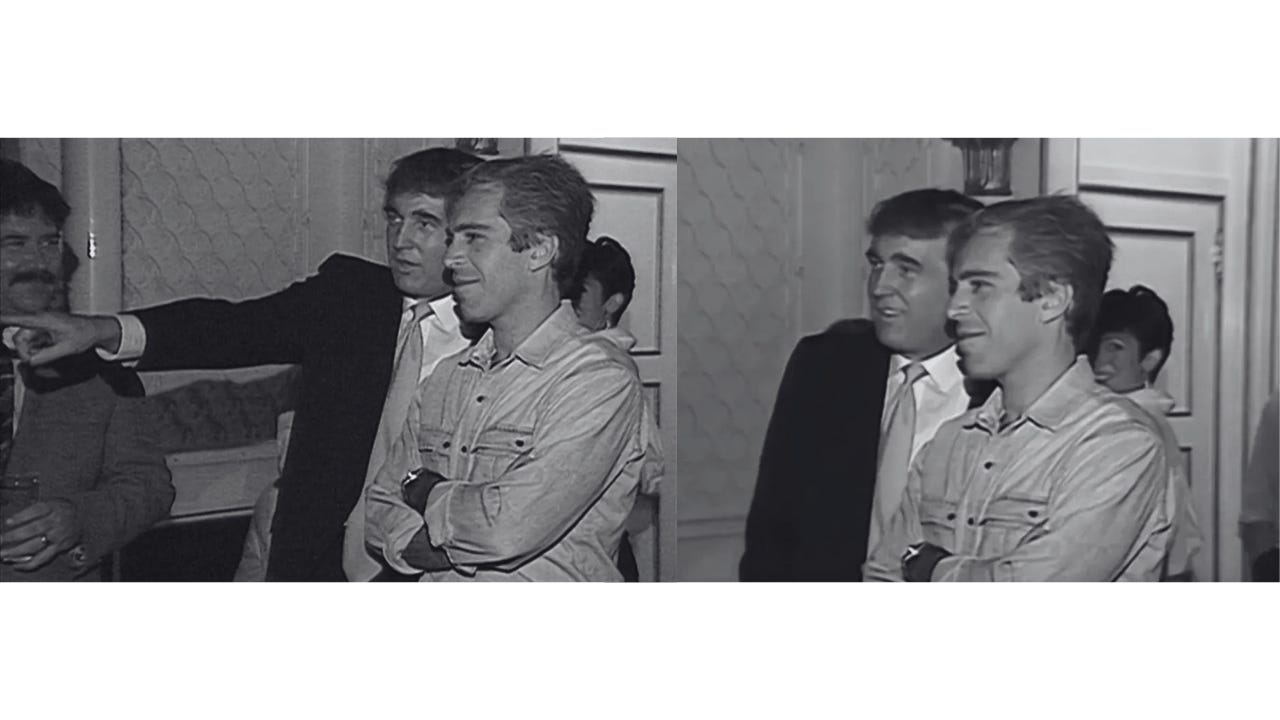
It’s possible Epstein attended as Trump’s guest, or as the guest of another member, rather than as a member himself. That distinction matters because if Epstein was never a member, Trump could not literally have expelled him as a member.
The most significant evidence I’ve seen comes from Democratic Congresswoman Madeleine Dean, who was permitted to review a redacted 2009 email with the subject line “Trump” inside the Department of Justice. She could only read the highly redacted document while being watched by government minders while taking notes.
Paid subscribers of The Red Letter can support independent journalism and read:
The contents of the “Trump” email reviewed inside the Department of Justice.
What it says about Mar-a-Lago, Epstein’s plane, and Trump’s knowledge of the allegations.
Why Trump’s lawyer was communicating with Epstein’s lawyer in 2009.
