

Inside Trump’s $1.776 Billion Loyalty Program
Behind the patriotic branding lies a sweeping new effort to redirect taxpayer money toward the perceived victims of Trump-era “lawfare.”

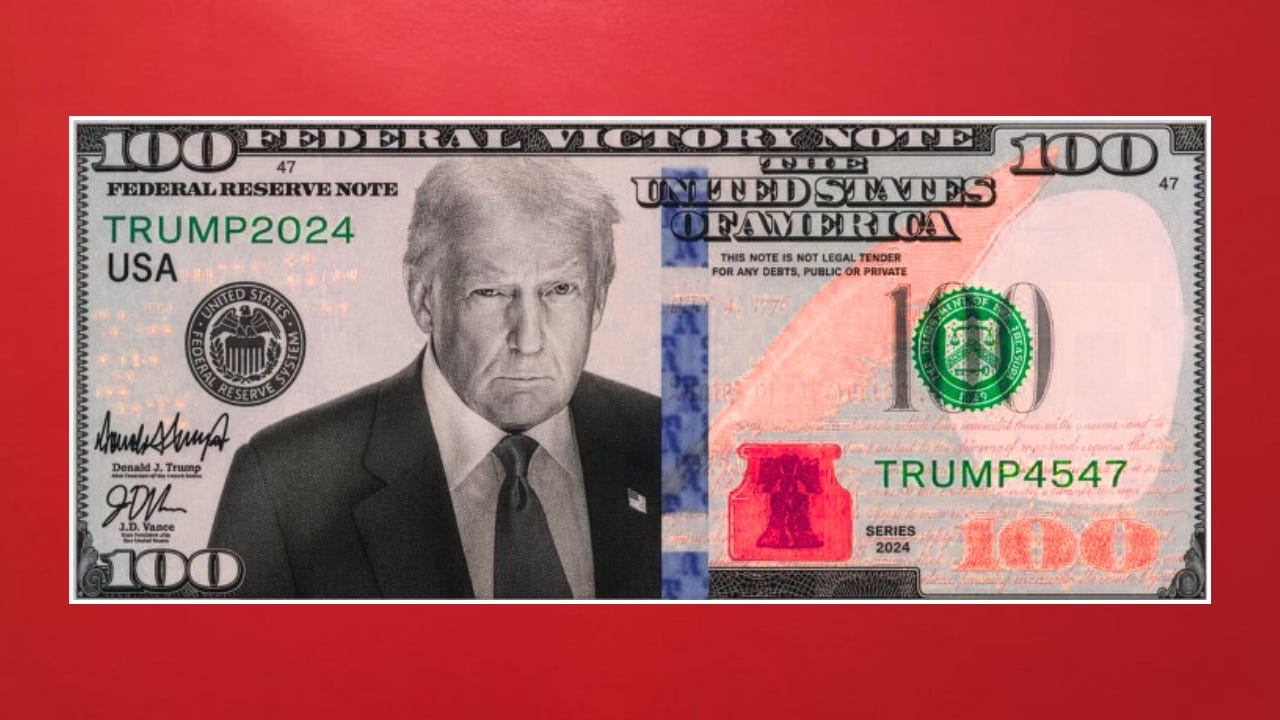
Welcome back to The Red Letter. I’ve been buried in a move, so I tapped Abi Baker to unpack what may be one of the most outrageous taxpayer-funded slush funds in modern political history. Thank you for your patience while I get settled.
$1.776 billion. That’s a very large figure, masked by its illusion of patriotism to evoke 1776, the year of the nation’s founding. But Americans can see it clearly for what it is, a very expensive middle finger to taxpayers in the form of a slush fund for President Donald Trump’s political allies.
This week, the Trump administration quietly unveiled what may become one of the most controversial instruments of presidential power in modern history: an “Anti-Weaponization Fund” housed within the Department of Justice.
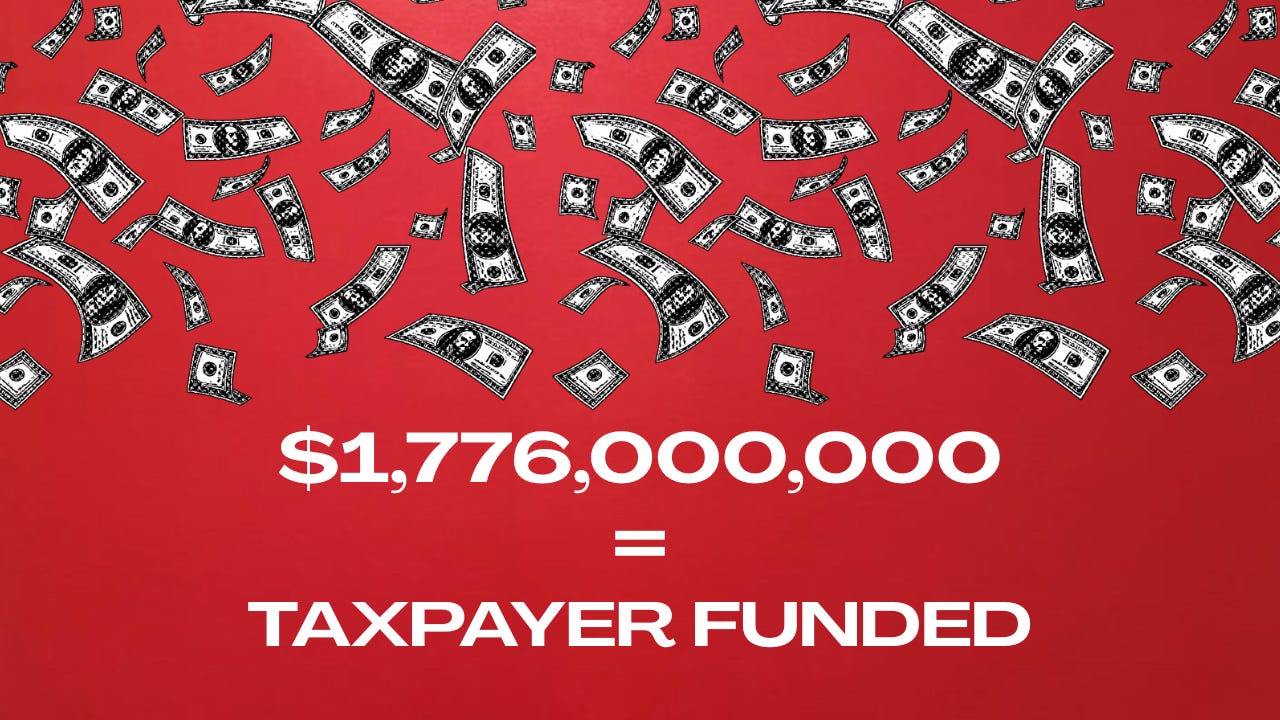
The fund would draw from the federal government’s Judgment Fund — a taxpayer-backed pool traditionally used to settle lawsuits against the government — and make up to $1.776 billion available to alleged victims of “lawfare” and political persecution, categories that Trump and his allies have spent years aggressively redefining.
What began as Trump’s long-running $10 billion lawsuit against the IRS over leaked tax returns has now evolved into something far broader: a government-administered restitution program for Trumpworld.
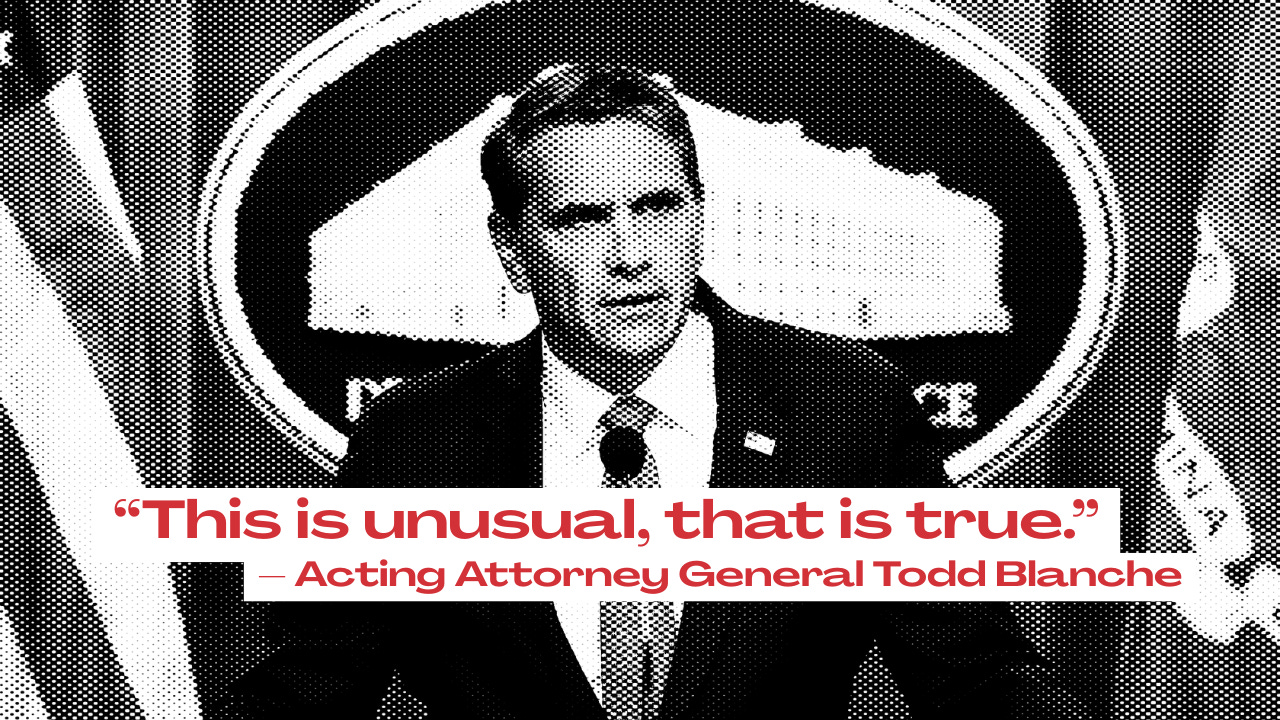
“This is unusual, that is true,” Acting AG Todd Blanche testified on Tuesday before a Senate Appropriations subcommittee. “But it is not unprecedented, and it was done to address… years of weaponization…It’s not limited to the Biden weaponization. It’s not limited…to January 6th, or to Jack Smith.”
He said the fund will act as a “lawful process for victims of lawfare and weaponization to be heard and seek redress.”
Critics see something else entirely: a politically controlled slush fund operating with minimal oversight and broad discretion inside Trump’s DOJ.
The arrangement is extraordinary even by Trump-era standards.
In exchange for dropping litigation connected not only to the IRS leak but also to the Mar-a-Lago search and aspects of the Russia investigation, the administration would establish a commission empowered to award payouts to people claiming political persecution.
But there’s little indication the program would operate neutrally.
Would Democratic figures currently under investigation qualify? Sen. Mark Kelly (D-Az.), who has faced Pentagon scrutiny after publicly advising troops to refuse unlawful orders? Sen. Adam Schiff (D-CA) who Republicans have accused of mortgage-related misconduct? Former FBI Director James Comey, who was investigated after posting an image of seashells arranged to read “86 47.”
Their eligibility appears doubtful.
The likely beneficiaries are far more obvious: Trump loyalists who became central characters in the movement’s grievance narrative.
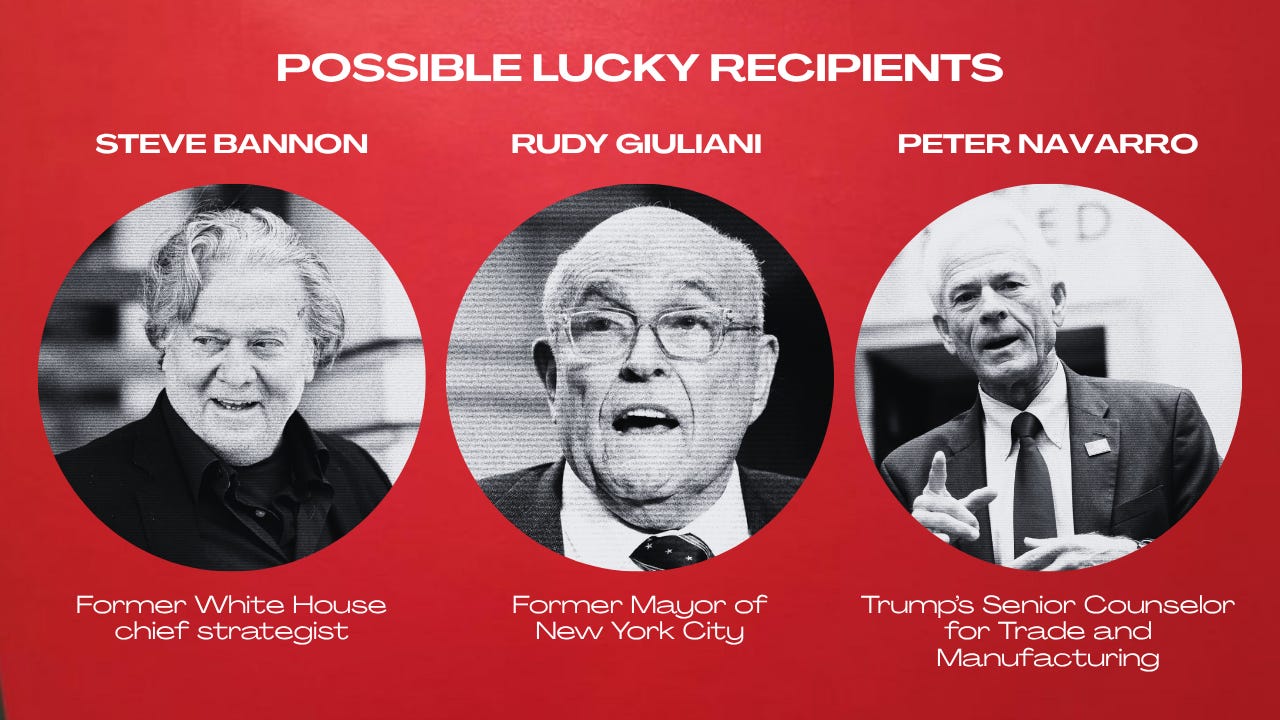
Former White House strategist Steve Bannon and trade adviser Peter Navarro — both jailed for defying congressional subpoenas tied to the January 6 investigation — could potentially qualify. So could Michael Flynn, Trump’s first national security adviser, who pleaded guilty to lying to the FBI before later attempting to withdraw the plea. Rudy Giuliani, indicted over efforts to overturn the 2020 election, also seems like an obvious candidate.
And then there are the January 6 defendants themselves — many convicted by juries or after guilty pleas — but recast inside Trump’s political mythology as victims rather than perpetrators.
According to ABC News, DOJ lawyers initially explored whether the government could compensate Trump directly while his own administration simultaneously controlled the agencies defending against his lawsuit.
That approach reportedly became difficult to sustain once a federal judge began scrutinizing whether the executive branch was effectively litigating against itself.
So the administration appears to have found a workaround: convert the settlement into a quasi-independent compensation system.
The proposed board would reportedly consist of five commissioners appointed by Blanche, who previously served as Trump’s personal defense attorney before joining the administration. Trump would reportedly retain authority to remove commissioners without cause.
Democrats erupted almost immediately.
Rep. Alexandria Ocasio-Cortez (D-N.Y.) called the proposal “outright corruption.” Sen. Chris Van Hollen (D-Md.) described it as “pure theft of public funds.”
Even some Republicans appeared uneasy. Rep. Brian Fitzpatrick (R-Pa.) questioned whether the arrangement could survive judicial scrutiny. Senate Majority Leader John Thune brushed it off, saying he’s “not a big fan,” questioning the necessity of the fund, “I don’t see a purpose for that.”
“I don’t even know how that’s allowable to happen,” Fitzpatrick told ABC News.
But the deeper significance here extends beyond the legal fight.
Trump has spent nearly a decade building a political movement centered not just on loyalty, but on grievance and retribution. His second administration increasingly appears designed not simply to dismantle institutions he distrusts, but to redirect federal power toward repairing the perceived injuries of his political movement.
The symbolism of “1776” matters because the administration wants it to matter. The fund is being framed as revolutionary restitution ahead of America’s 250th anniversary — an attempt to transform Trump’s legal and political battles into a founding-myth narrative and dismantle institutions he distrusts.
Washington has always rewarded loyalists. Presidents hand out ambassadorships, cabinet posts, senior administration official jobs that often become television contracts, consulting deals, corporate board seats, and lobbying access after officials leave government.
But this feels different.
Here, the federal treasury itself is being repositioned as an instrument of ideological compensation.
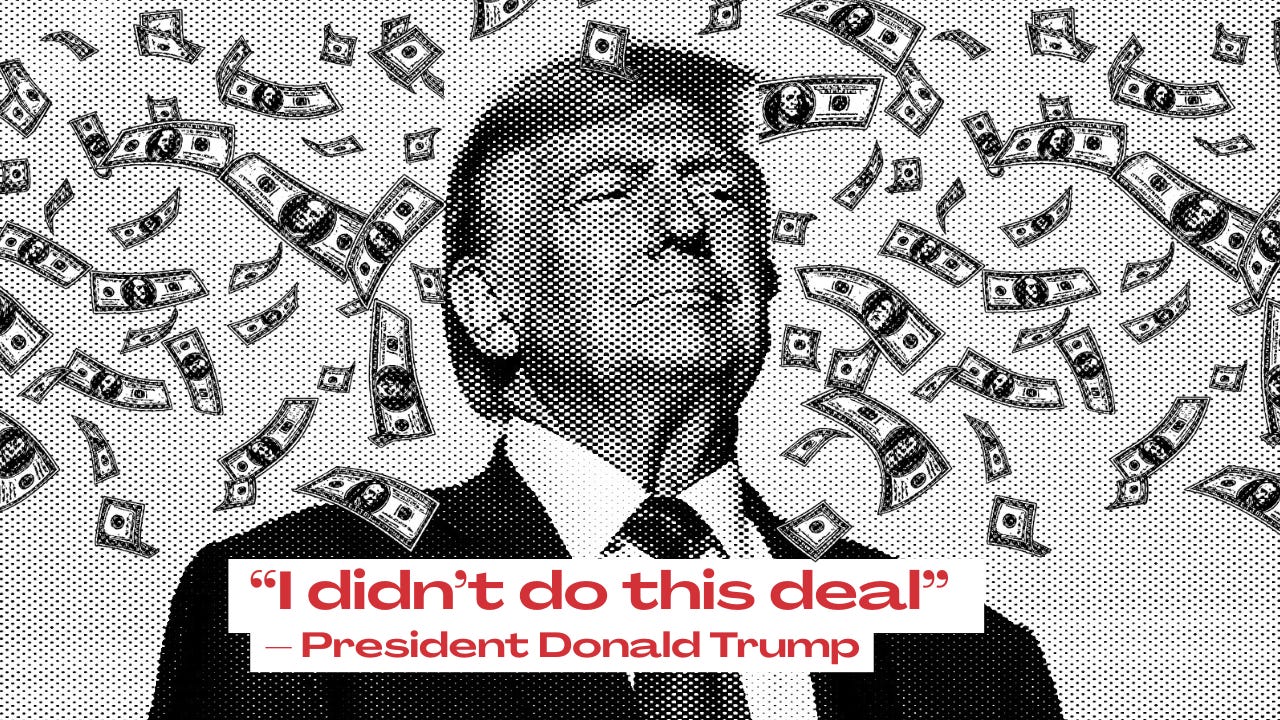
When asked about the arrangement, Trump feigned surprised, “I didn’t do this deal… it was told to me yesterday.”
But this is Trump’s Washington after all, and for now, he rarely loses.
You said it perfectly. All of this was a well written piece.
Thank you making it understandable. Outrageous