

Inside the Hilton, Access Was Easy
The Red Letter's reporter on the ground during the White House Correspondents’ Dinner describes a system built on trust, and its limits.

Welcome back to The Red Letter. As you know, I passed on a ticket to this year’s White House Correspondents’ Dinner to attend the memorial for Virginia Giuffre. But my reporter, Abi Baker, was inside the Washington Hilton as events unfolded in real time. This account is based on her firsthand reporting and has been edited by me for clarity and tone.
The first sign something was wrong wasn’t the sound, it was the movement.
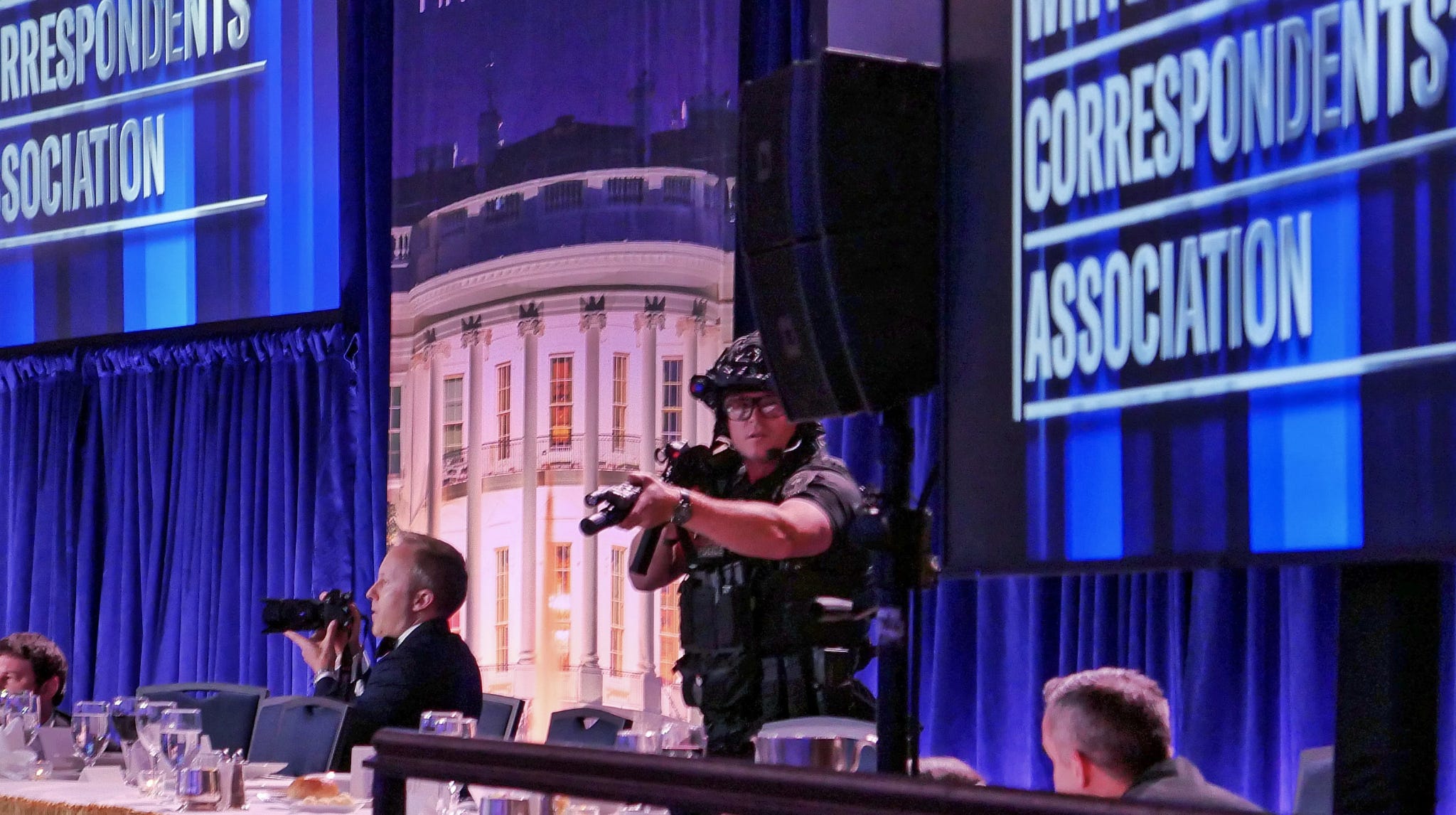
Four Secret Service agents, carrying long guns, sprinted past me toward the escalator inside the Washington Hilton. Conversations stopped mid-sentence. Phones came out. Within seconds, the room understood: something had gone very wrong.
This was supposed to be one of the most secure buildings in Washington. That night, it didn’t feel like it.
At the entrance I used, there were no ID checks, no automated or digital ticketing like you’d expect at most major venues. The system relied largely on paper.
I didn’t have a dinner ticket, just an invite to a pre-party, so I flashed my phone at security, pulling up the email invitation. There was no barcode to scan, no list to check—just an email for a network news reception that could have been forwarded by anyone. At the party I was invited to, no one asked for ID, only my name. At others, just feet from the ballroom, I walked in without being stopped.
Inside, a line of damp ballgowns and tuxedos snaked through the lobby, guests slightly undone by the storm rolling over the city. But once you were in, the distinction between dinner guests, carrying paper tickets, and those invited to the surrounding receptions quickly dissolved. There was no clear separation, no consistent enforcement, just a crowded hotel and a loose understanding of who belonged.
It was hard to tell who was actually invited and who was simply moving through the ecosystem. In a room like that, it didn’t matter. As long as you looked the part, you blended in, and in Washington, looking the part doesn’t necessarily mean you have power.
I wasn’t in the ballroom when the shots were fired. I was one floor above, finishing dinner at the hotel bar, recapping the weekend and watching the room. I had just come from the FOX News reception. No one questioned me as I walked through the open door, where House Speaker Mike Johnson was standing, almost like a guest greeter, smiling for selfies. Press Secretary Karoline Leavitt was nearby with Katie Miller. Across the bar stood Acting Attorney General Todd Blanche.
“It almost felt like a mini convention,” former Trump policy advisor Kamran Daravi told me.
It was my first White House Correspondents’ Dinner weekend. Within minutes, the distance between observer and participant collapsed.
The agents disappeared down the escalator. About twenty people bolted from the bar to follow after them. They didn’t go all the way down, just hovered at the top of the escalator, trying to catch a glimpse
At the bar, a woman wearing a FOX News producer lanyard placed a frantic call, “we have to go,” she said, and then bolted, grabbing a man with her. The TV’s streaming CNN briefly flickered to black. People began refreshing news feeds that weren’t updating fast enough. Some guests rushed toward the exits. Others stayed planted, trying to make sense of what they were seeing. Some started live-streaming, reporting in real time. A few, noticeably, didn’t seem to register it at all.
Inside the ballroom, the scene was more chaotic. One reporter told me that the glasses shattered and guests dove under tables after hearing what sounded like multiple shots. Others described Secret Service agents flooding the room and escorting key officials out.
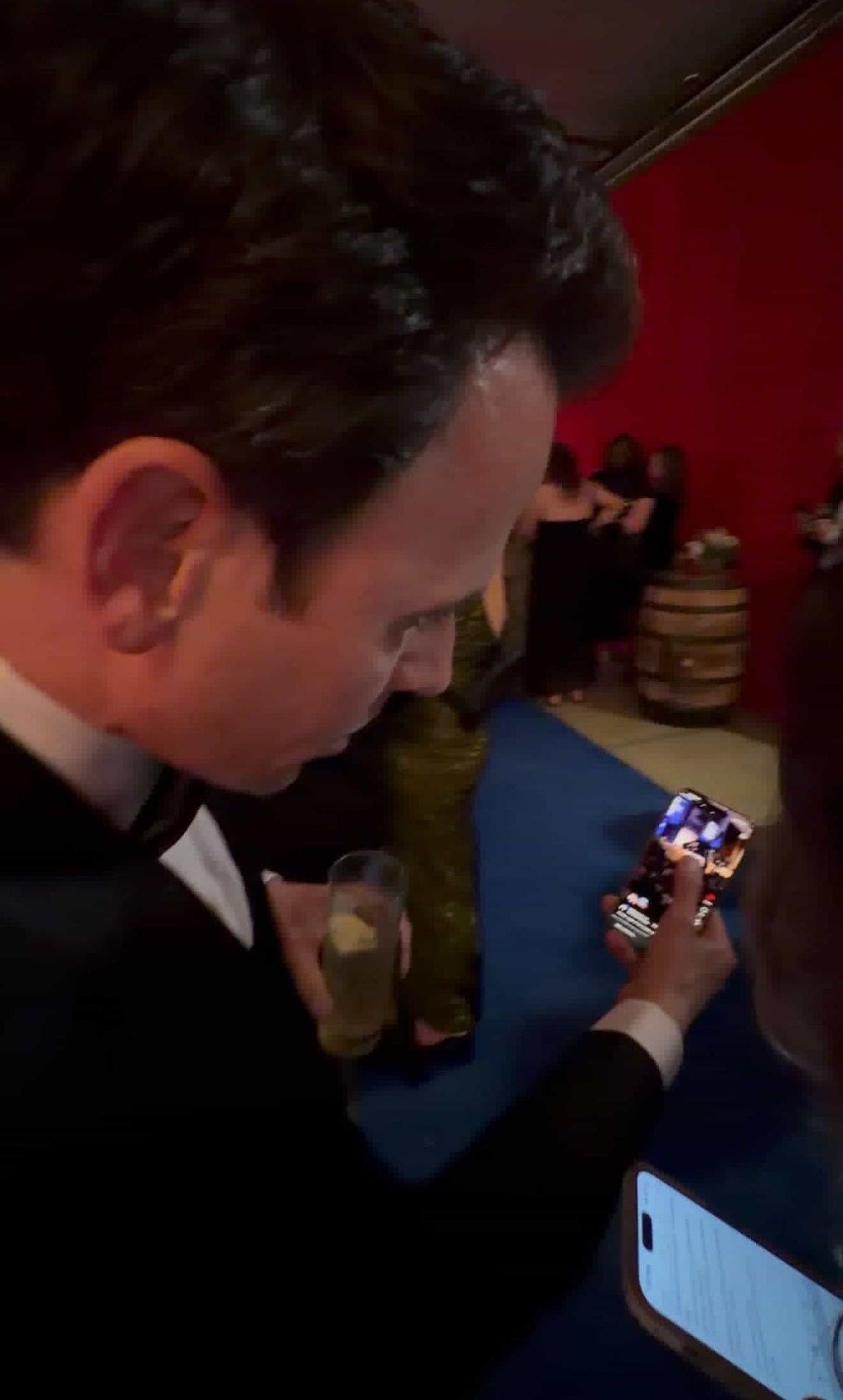
Back upstairs, information lagged behind reality. In the dining room, guests grabbed bottles and clustered around anyone with a video. Mentalist Oz Pearlman gave guests a play-by-play, walking them through clips on his phone.
I made my way over to the lobby, where the scale of the response came into view. Ambulances and police cars lined the entrance. Helicopters circled overhead. Guests clustered in hallways, still holding drinks, unsure whether to leave or stay. I watched Blanche rush out. Department of Homeland Security Secretary Markwayne Mullin followed. D.C. Mayor Muriel Bowser arrived shortly after.
Every few minutes, I asked officers for updates. One told me to watch the president’s press conference.
What became clear, quickly, was how easy it had been to get inside in the first place. To enter the hotel, I had only shown a screenshot of an invitation to a reception. There were magnetometers to enter the ballroom, but not for the wider hotel, which was hosting multiple events at once, including the FOX News reception that seemed to let everyone in, despite the fact that the third in line to succession, Johnson, was milling about. Several attendees I spoke with raised the same concern: once inside, movement was largely unrestricted.
Before the attack, I watched Leavitt and her team slip past a curtain rather than go through a formal checkpoint. Anyone could have followed.
As the night wore on, a strange calm began to settle.
Former Republican Congressman Dan Burton regrouped with his wife at the bar. “Whenever the president or the vice president is speaking to a large group,” he told me. “They should have a bulletproof glass shield in front of them.. If anybody at Secret Service is watching this, pay attention.”
Dr. Michael Jenkins, president of The Washington Times and a frequent attendee, called it “shocking,” the first time in the dinner’s history that it had effectively been shut down.
Even then, the instinct in Washington wasn’t to stop. The president initially signaled he wanted the program to continue.
The shock of what had happened—violence breaking out during one of the city’s most choreographed nights—collided with something else: a kind of practiced detachment. People ordered drinks. They took photos. They compared versions of events, some more dramatic than others.
Eventually, guests were bused to afterparties, where security was, ironically, tighter than it had been at the Hilton. People reunited, hugged, and kept going.
By morning, Washington had already begun to reset. There was lingering shock, yes. But there were also brunches. Outfits to wear. Rooms to work.
In this city, even a night like that folds quickly into the next day’s schedule.
In Washington, “the show must go on.”
It's so wild, I hope this post goes viral to help show all the issues that were present. Things could have easily gone much much worse.
Lol, I’m going to the Devil Wears Prada 2 red carpet/screener tonight. It’s your ID, the digital invite, and your Television Academy card or other entertainment union card, and your name has to match the list they have. This is the same process for the Emmys or any red carpet screener I’ve ever attended. Sometimes, I’ll say that at these things they really don’t check. If you look like you belong, they just let you in. Other times, it’s the same security company that handles all of this, so they see the same faces and just expect you to be on the list because it’s the same people who go to these events. Amazing that the WHCD security was that lax, as the “alleged would-be assassin” said in the manifesto.